About us
Our Story
3B Human Performance was founded after an unexpected realization.
While speaking at a Google summit on veteran transition and mental wellness, founder Liam Cogan began conversations with leaders from some of the nation's largest construction organizations. As those conversations continued and invitations followed from companies including The Whiting-Turner Contracting Company, Turner Construction, Google, and others, one thing became increasingly clear: the challenges facing industrial construction looked remarkably familiar.
The communication gaps, leadership challenges, safety risks, and workforce burnout mirrored many of the same problems Liam had spent years overcoming in elite military organizations and later addressing through his nonprofit, 3Bravo, which helps veterans recover from TBI, PTSD, and the challenges of transition.
After visiting projects across the country and working alongside executives, safety professionals, and field teams, it became clear that the construction industry didn't need another safety company. It needed a better operating model.
3B Human Performance was built to meet that need.
Drawing from elite leadership principles, modern human performance science, workforce wellness strategies, and practical construction safety experience, 3B developed a first-of-its-kind approach that brings leadership, safety, and wellness together into one integrated system.
We believe these three disciplines are inseparable. Strong leaders build trust. Healthy workers make better decisions. Effective safety creates accountability. When all three work together, culture becomes a competitive advantage.
Today, 3B Human Performance partners with owners, general contractors, and trade partners to build safer projects, stronger leaders, healthier workforces, and cultures that continue performing long after the project is complete.
Our Founder
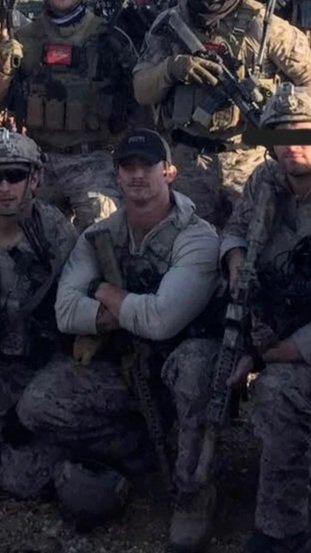
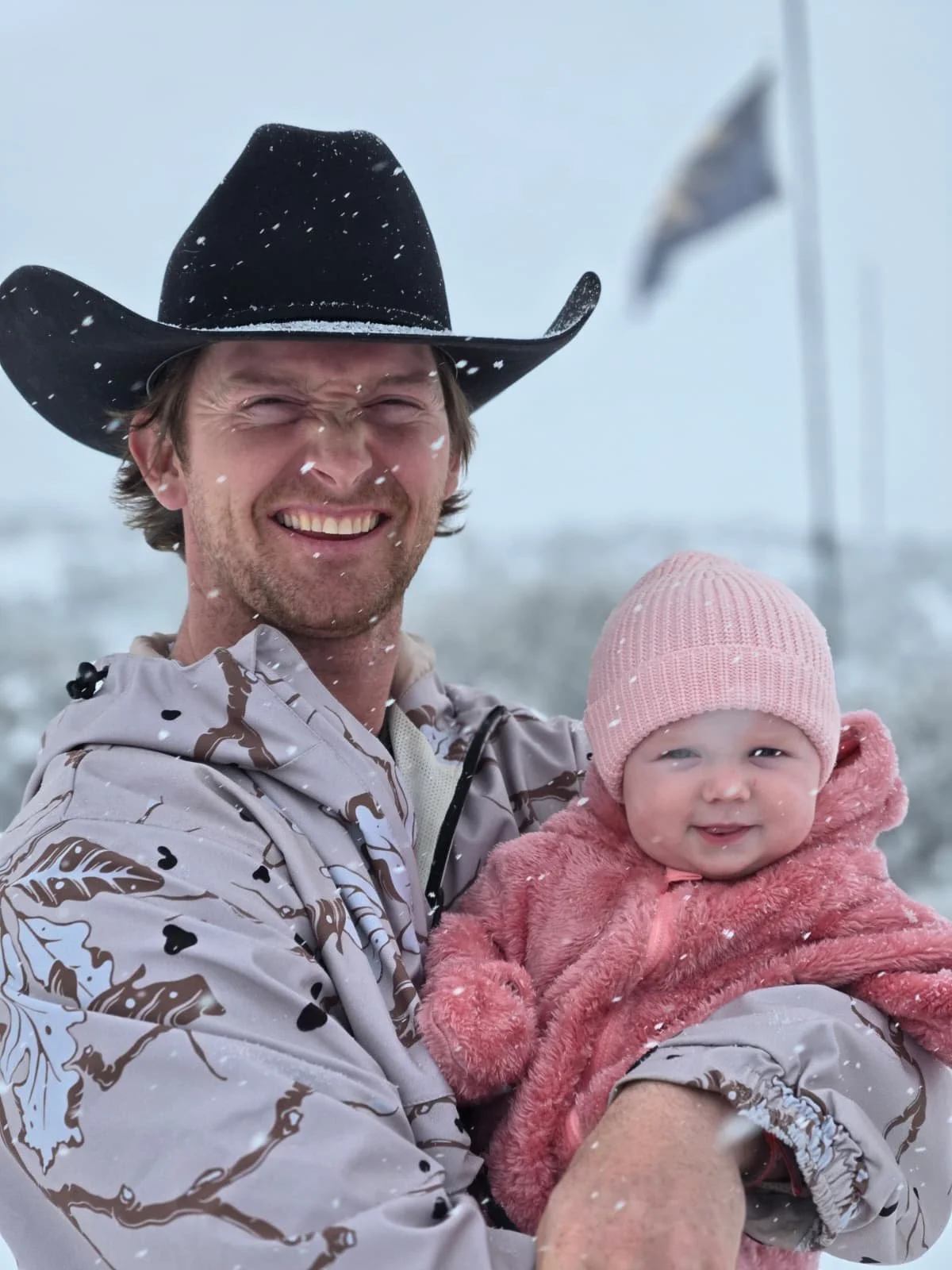
My name is Liam Cogan. I’m a Navy SEAL veteran of nine years, a lifelong team leader, an outdoor and adrenaline enthusiast, a husband, a father, and a devoted follower of God.
When I was 10 years old, my father died in a car accident. I was sitting in the seat behind him. That moment led to truancy charges, four court appearances for drinking, a 2.25 graduating GPA, two suspensions, innumerable detentions, two totaled cars, and two survived suicide attempts.
All of that is true, but so is this: I set the second-place record for the two-mile race in cross country in seventh grade, placed third out of 50,000 students in the National Association of Conservation Districts (NACD) Poster Contest, scored a 1290 on my SAT in seventh grade (equivalent to the 75th–80th percentile for graduating high school students), served as captain of the varsity soccer team for two years, won eight superlatives, received awards in soccer, lacrosse, and football, including MVP in soccer, appeared on prom court, and dated the prom queen.
I later attended Cleveland State University, where I earned a 3.8 GPA during my first semester before completely failing my second. After a three-week hospital stay due to a blood infection stemming from an open wound on my knuckle during flu season, I decided the semester was too far gone and that I would be better off in the military.
I joined the Navy at 19, completed Hell Week at 20, and became a Navy SEAL at 21.
After completing the hell that is Basic Underwater Demolition/SEAL training, I headed to the East Coast to join SEAL Team Ten. Word around the community was that Team Ten was deploying to combat, and that was exactly where I wanted to be.
After a difficult and lesson-filled first platoon, I came into my own as a leader during my second platoon. At 25 years old, I became the de facto tactical leader of our platoon, an uncommon achievement. Leading men five to ten years my senior through high-stress, high-danger environments forced me to study what made me an effective leader. What tools had I developed along the way that allowed me to lead under pressure?
Following that platoon, I attended instructor school and completed my required time as a teacher. During that period, I realized that much of my effectiveness as a leader came from my ability to teach.
I served as a Master Explosives Instructor for two and a half years, teaching nearly 200 SEALs how to use explosives in high-stress, extremely high-risk, no-fail environments.
At the Explosive Breacher Schoolhouse, students were divided into four groups, each led by a lead instructor. Every class included four team competitions. I led teams through nine separate classes, totaling 36 different team challenges. My teams won every single challenge.
Statistically, the odds of randomly being assigned the strongest students in every class were effectively impossible. So how did my teams continue to outperform everyone else? That question became the beginning of this story.
By teaching my teams to regulate stress, redefine success, simplify execution, and learn to approach problems from angles other teams failed to see, my teams developed greater clarity, adaptability, and precision in high-consequence environments.
As I refined my teaching methods, my time in the Navy came to a close, and in February of 2022, I began my transition out of the military.
At first, it seemed like I had done everything right: a good job, a promising future, status, and strong pay. But within a year, it all fell apart.
I found myself living on a farm in the red dirt of Colorado in a 20-foot trailer with my wife, Laura, and our two beagles. The farm belonged to my BUD/S swim buddy and one of my best friends to this day, a fourth-generation farmer who had been severely injured in an explosion and medically separated from the Navy.
In what felt like a second beginning after the military, I found myself working what may be America’s next hardest job.
After months of 16-hour unpaid days on the farm, 4 a.m. workouts, growing debt, and late nights completing coursework to finish my undergraduate degree, the weight became overwhelming. I nearly lost my years-long battle against suicide. Only Laura’s unwavering support and the brotherhood of my friends carried me through.
At the end of our first season on the farm, I learned through a LinkedIn connection that I should have been receiving a Monthly Housing Allowance through the GI Bill. That benefit would have provided roughly $1,200 per month while we were struggling financially on the farm. That was groceries. That was survival.
The idea that a single conversation could have eased some of the darkest moments of my military transition made me furious. If the VA is so large, and thousands of nonprofits receive millions of dollars to “help” veterans, how could something as simple as informing veterans about one of their largest benefits fall through the cracks so easily?
I began a personal mission to find out whether my experience was unique or whether this type of life-changing failure was common. I opened Pandora’s box.
There were hundreds of thousands of veterans, dependents, and active-duty service members who were completely unaware of the benefits available to them. So we got involved.
After years of research into how to best help veterans, I realized we needed to reach veterans before they reached the point of crisis.
I began working with veterans suffering from Military Sexual Trauma (MST), Traumatic Brain Injury (TBI), and Post-Traumatic Stress Disorder (PTSD). We developed a mental health program rooted in my own recovery and two decades of healing. That program culminates in retreats at Sage Brush Ranch, where we focus on improving mental health through physical wellness, human connection, and changes in behavior, changes in Human Performance.
This is where our nonprofit, 3Bravo, and the 3B Human Performance program came together.